

Raising the Heights
Today’s Boston College would be unrecognizable to the first students who enrolled in 1864—so much has happened since then. BC has evolved from a small, all-male commuter school located on two blocks near downtown Boston to a complex, coeducational, global university with more than 400 acres of property and enrolling approximately 15,000 students.
Every step of BC’s transformation has been made possible by the visionaries and benefactors who saw the promise of where we stand now. Boston College is a better place because of the energy, creativity, perseverance, and generosity of all Eagles through the years.
Soaring Higher will write the next chapter in BC’s history, but realizing the campaign’s full potential first requires a better understanding of the people and moments that made it all possible.
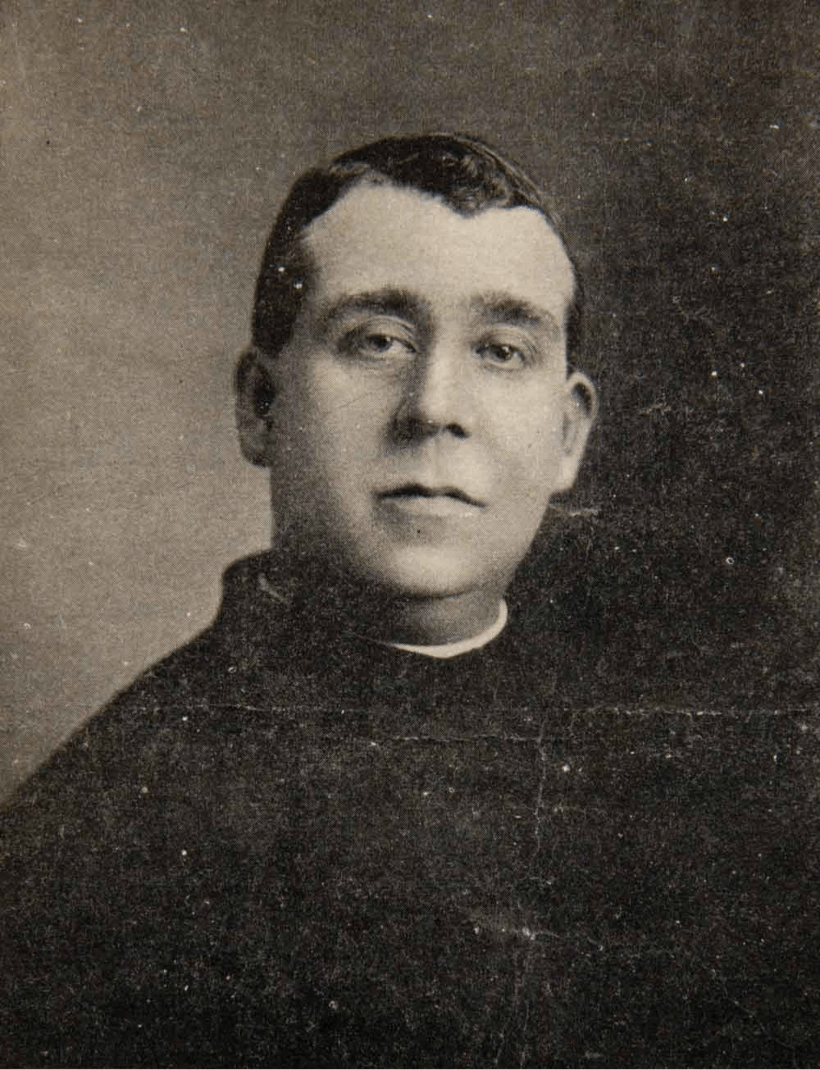
For many, Boston College is synonymous with Chestnut Hill, but it wasn’t until 1907—nearly 45 years after its founding—that BC would find its permanent home. President Thomas Gasson, S.J., purchased 36 acres of land overlooking two reservoirs, dubbed it “University Heights,” and vowed to erect “the greatest Catholic college in America.”
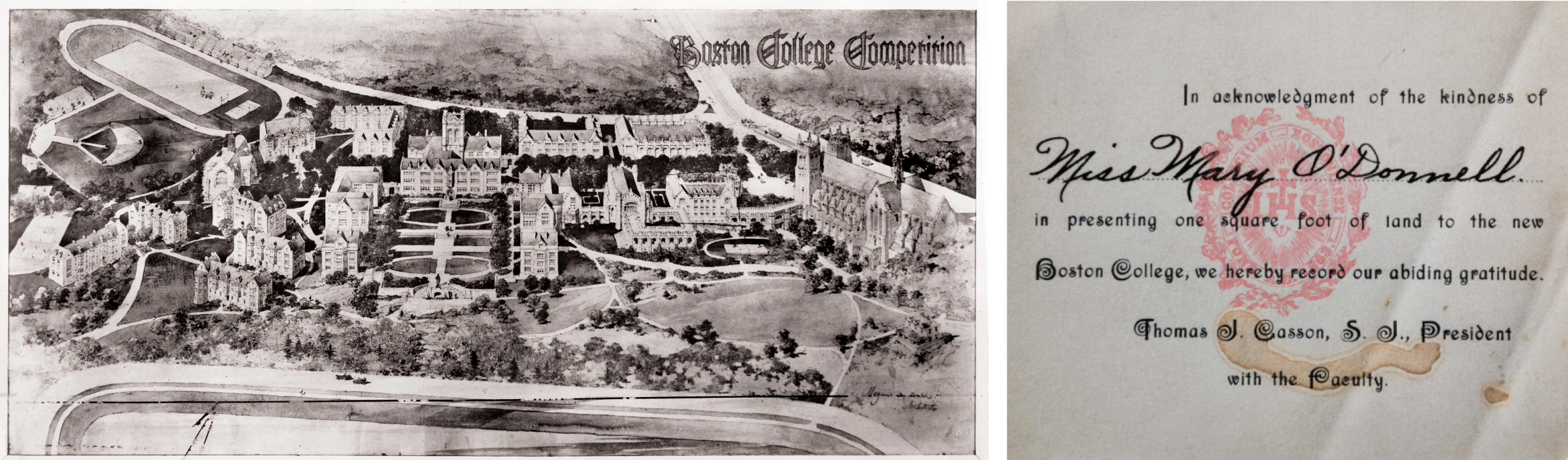
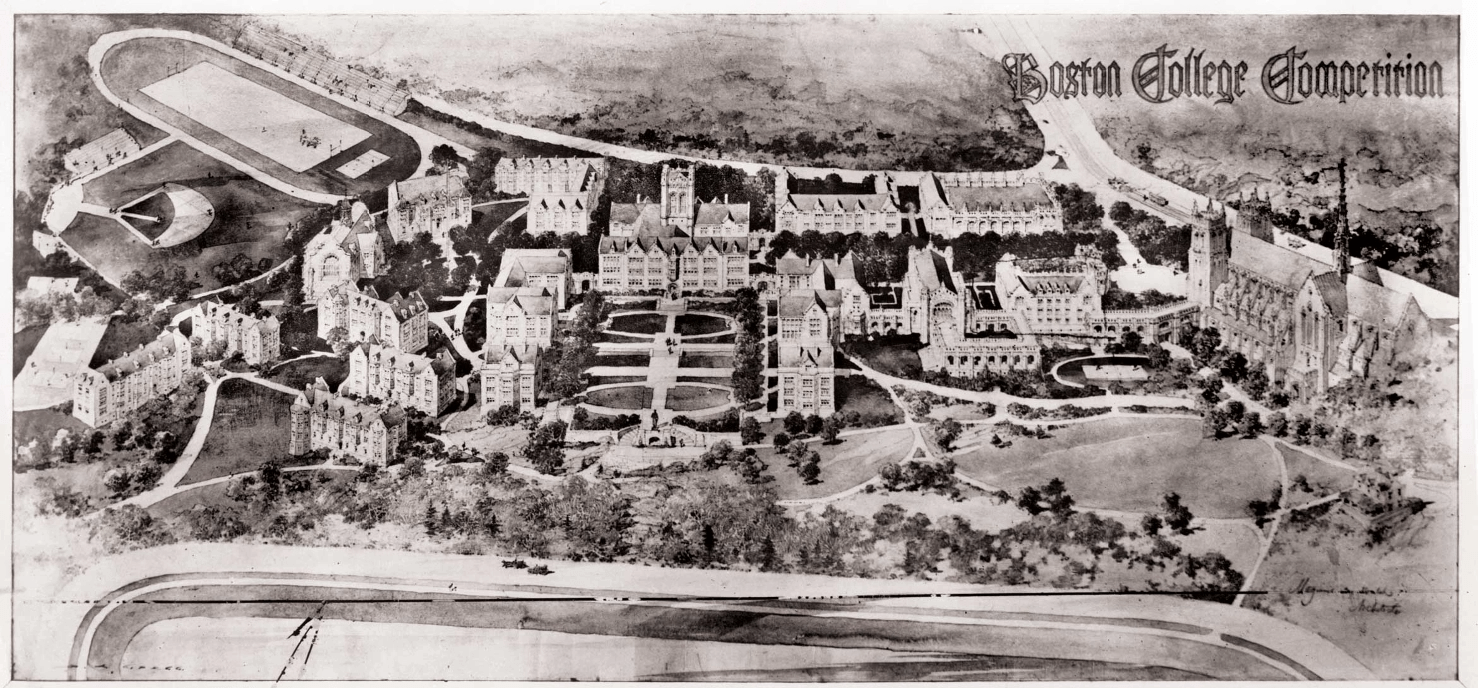

An architectural competition was announced to design the new campus, with the winning design pictured here. In response to an appeal from Fr. Gasson, alumni pledged thousands to a “land fund,” with Gasson reporting that Mrs. Mary Dryer, a widow, had made the first gift—of $1
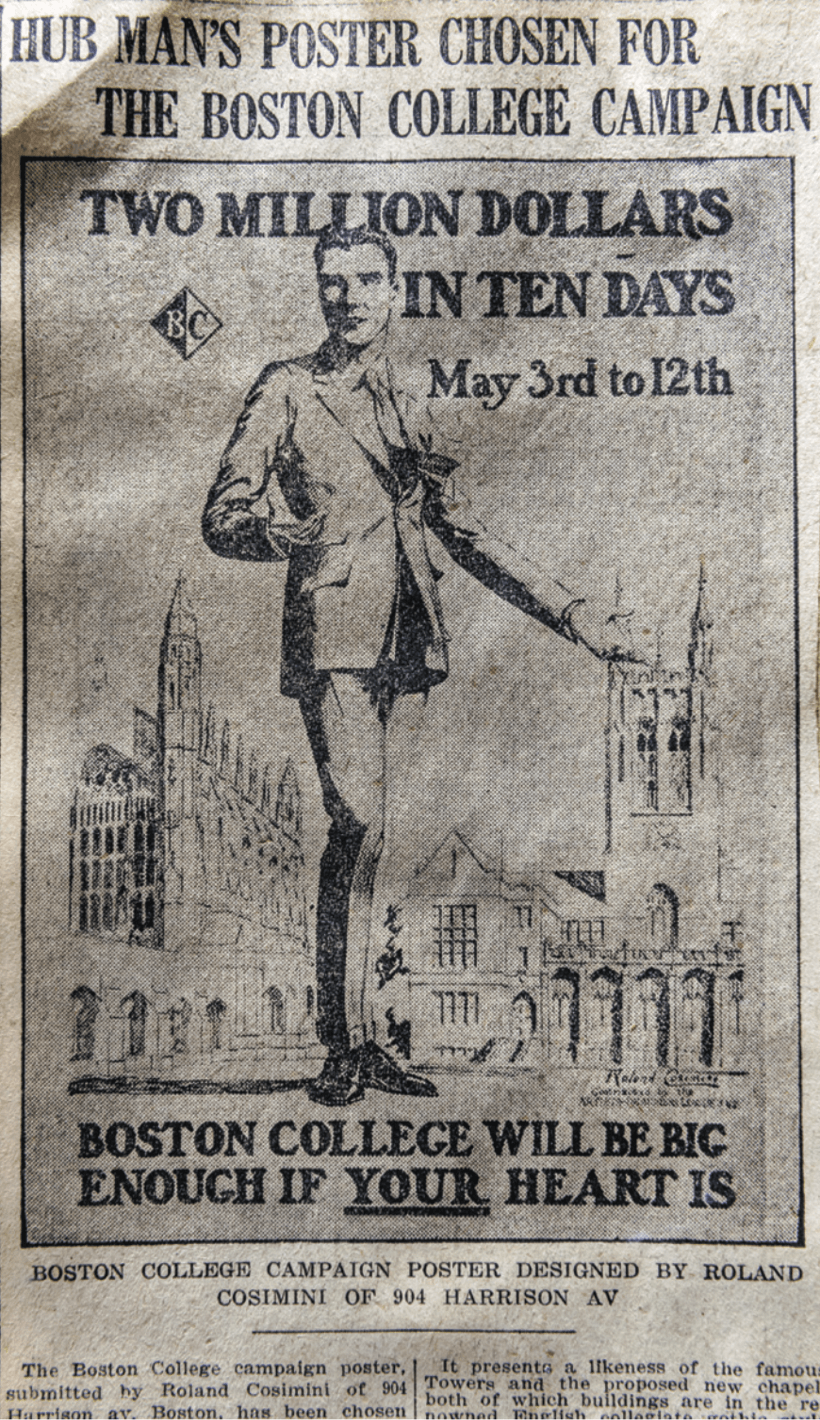
With great fanfare, BC launched a 10-day campaign in May 1921 to help kickstart the building of a new science building, library, chapel, and gymnasium under the slogan “Boston College will be big enough if your heart is.” Ultimately, it raised $1.1 million for the Heights.

The Philomatheia Club, a group of local Catholic women, was the college’s de facto fundraising office beginning in 1915. The club was inventive in linking philanthropy with a lively social calendar and became the first port of call for BC presidents looking to fund scholarships and many other priorities.
In the late 1940s, BC purchased the 37.5-acre Lawrence Basin below the main campus, making possible both the development of intercollegiate athletics and the evolution of BC into a residential institution. Short-duration gift drives urged supporters to “buy a brick for Boston College,” fueling campus expansion and postwar enrollment growth.
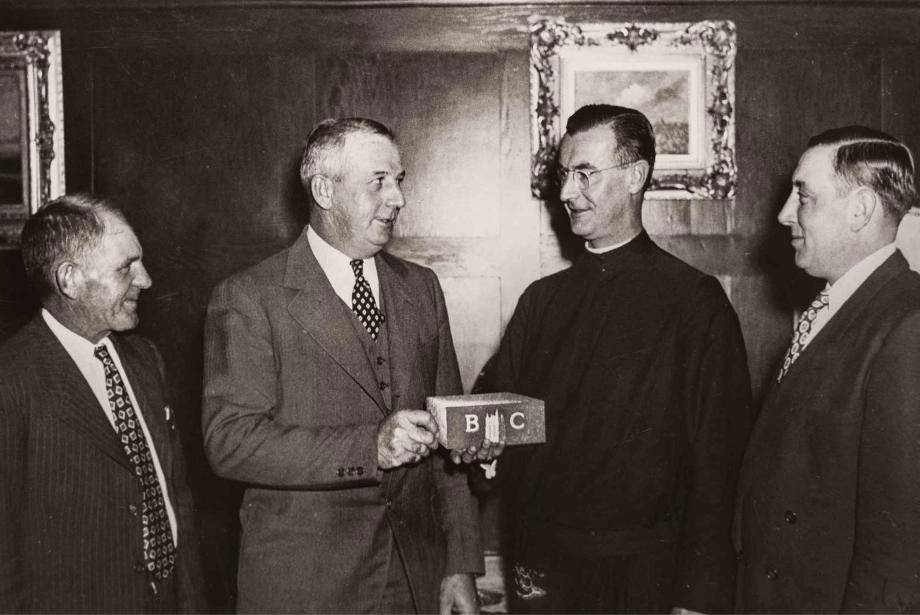
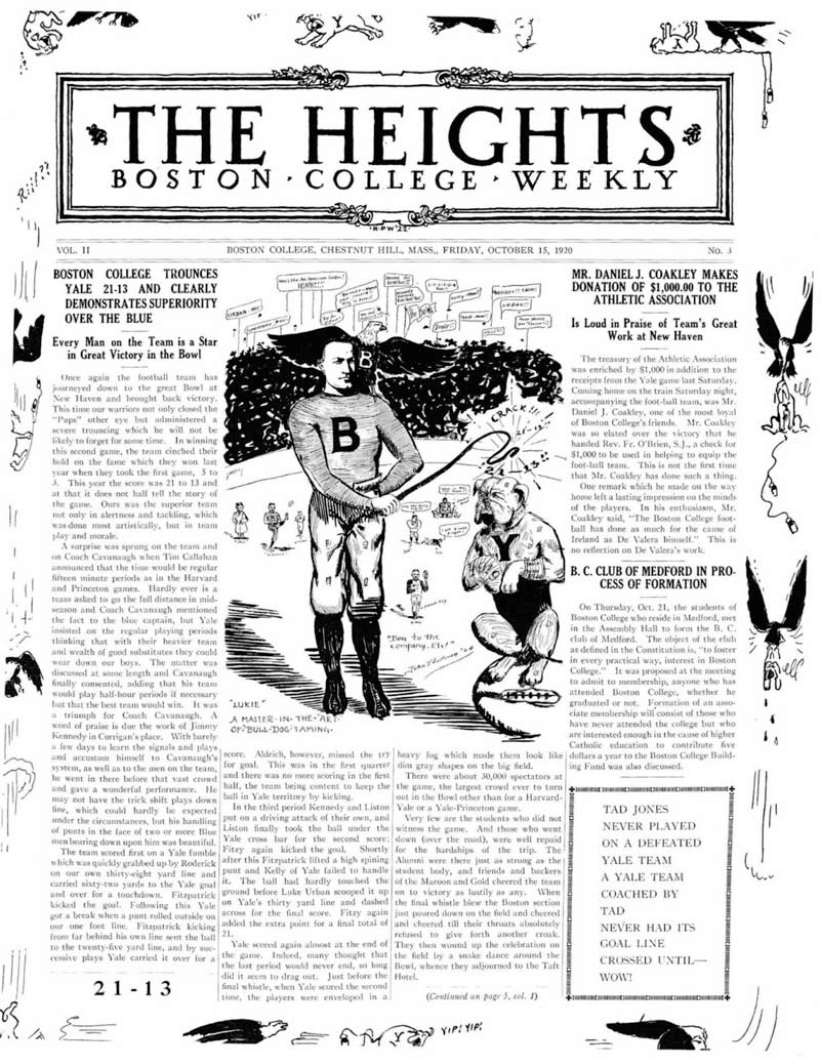
Key victories for Boston College teams have long inspired philanthropic support. Following a thrilling October 1920 football victory over Yale, Daniel J. Coakley handed over a $1,000 check for the Athletic Association while he was traveling with the team on the train home from New Haven.
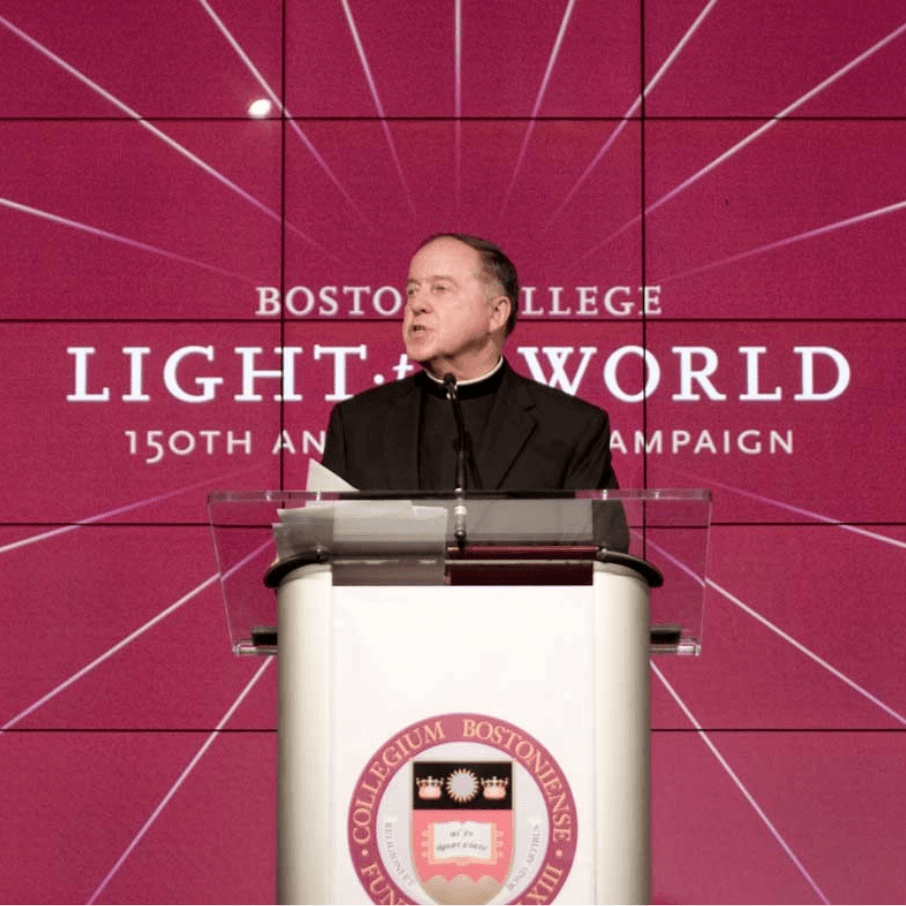
Fundraising throughout Boston College’s first century often relied primarily on small donations from large numbers of people. That changed with the launch of the New Heights Advancement Campaign in 1976, which raised more than $25 million over five years. The six-year-long Ever to Excel campaign concluded in 2003, racing past its $400 million goal. The University’s most impactful campaign to date was Light the World, which garnered $1.6 billion from 2008 through 2016.
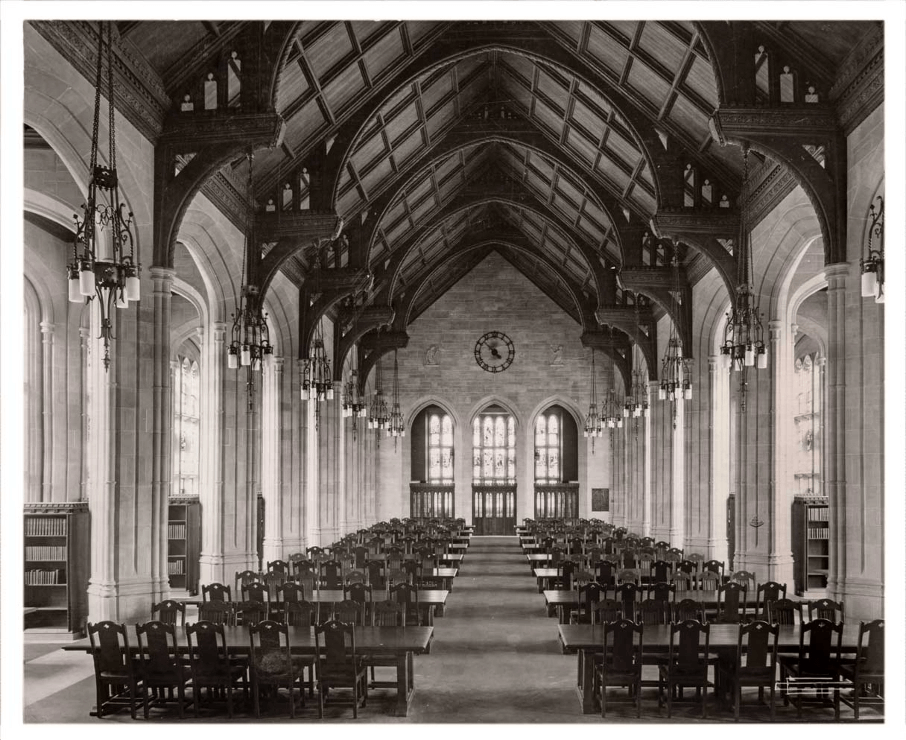
Named buildings, schools, centers, chairs, and other endowments dot the Heights thanks to major gifts from generous benefactors and other extraordinary contributions. However, that was not always the case. In 1952, Jesuit leaders of BC reversed a policy to never honor one Jesuit over any other through building namings. With the unanimous vote, Bapst, Fulton, Gasson, and Lyons became the official monikers of some of the Heights’s most hallowed halls.