
Striking the Match
By: Diana Griffith and Eric Bushnell, MA’22

Listen to the audio version of this article
In 2021, Boston College announced a historic Faculty Challenge Match, fueled by a $50 million pledge from an alum and his spouse who chose to remain anonymous. Their goal was clear: close the gap between BC—then home to about 100 endowed faculty positions—and peer institutions that boasted as many as 300 or more.
Five years later, their vision has been substantially realized. The initial pledge has catalyzed more than $100 million in new gifts and led to the naming of over 65 professorships, fellowships, and other academic funds—the most significant expansion of faculty support in Boston College history.
“We’ve always been proud of BC, but over the last 20 to 30 years, we’ve seen it grow from a great school to a truly outstanding research university,” the alum said. “This gift was our way of not only giving back to the school that means so much to us, but also to make sure future University leaders have the resources to remain academically competitive.”
“We have been delighted by the response from other alumni and families, not only their financial contributions, but the sense of momentum and excitement it has generated,” the donors said after hearing the final tallies. Longtime benefactors, they said this latest gift was motivated by their faith in BC’s leaders, particularly the outgoing University President William P. Leahy, S.J., and David Quigley, the Robert L. and Judith T. Winston Provost and Dean of Faculties.
Endowed positions are a necessary tool to attract and retain faculty across the full span of the academic life cycle, says Billy Soo, vice provost for faculties and professor in the Carroll School of Management, who oversees the recruitment, hiring, and management of more than 930 faculty members across BC’s nine schools and colleges.
“I was ecstatic when I heard about the gift because I knew it would have a multiplier effect on donors and on our ability to attract even more superstar faculty. The more endowed positions you have, the more flexibility you have to entice someone to come to—or stay at—your campus,” Soo says.
Through the Challenge Match, select endowed gifts $500,000 and above qualified for a two-to-one match; for example, a $2 million gift could receive an additional $1 million, reaching the minimum required to endow a professorship. This structure expanded each gift’s impact and, in some cases, helped donors reach new philanthropic milestones.


The impact of the Challenge Match gift will last for generations. When faculty choose to come here or remain here, they shape their students, and those students go on to flourish and influence others.”
—BILLY SOO
The Match in Motion
Inspired by the match and the 2023 launch of Soaring Higher: the Campaign for Boston College, the BC community embraced the chance to make a lasting difference at the Heights. Their impact reached every level of the University, from postdoctoral fellowships to deanships and other senior-level administrative posts, including the chair of the engineering department, directors of the Schiller Institute for Integrated Science and Society and the Prison Education Program, and the provost and dean of faculties.
The number of endowed professorships also expanded significantly, including commitments for four University professorships. These are the highest distinctions available for faculty who have invested years, often decades, into research, teaching, and service.
“Many of our senior faculty want to be seen. They’re going the extra mile—helping students, producing research, mentoring colleagues, sacrificing their free time,” says Soo. Endowed professorships are also crucial in recruiting established faculty from other institutions, he adds: “When you offer a senior scholar an endowed chair along with flexible research funds, it becomes a powerful incentive to consider moving to Boston College.”
For junior faculty, the needs are different but no less important. Early‐career scholars rely on research funding to collect data, hire assistants, and pursue projects not yet ready for external grants. Through the Challenge Match, donors helped establish 22 faculty fellowships, nine dean’s faculty fellowships, and five provost’s faculty fellowships—a dramatic infusion that gives rising scholars the freedom to take intellectual risks and build strong foundations for long‐term success.
Beyond professorships and fellowships, donors also funded specialized positions to meet school‐specific needs. At the Lynch School of Education and Human Development, two endowed visiting professorships will bring accomplished scholars with fresh perspectives to campus. In the Connell School of Nursing, a new endowed professor of the practice will honor the essential teaching and mentoring role of non‐tenure faculty by bringing real-world clinical experience directly to students. And in the School of Social Work, an endowed postdoctoral fellowship fund will attract rising scholars and support research on urgent social matters.
“One of the most impressive aspects of this match is how widely it reached,” says Soo. “It shows how a single person’s generosity can have such a wide magnitude of effect on the University.”
See the Challenge Match in action in this video:
Many donors found the Challenge Match helped them support BC in ways that made a difference for them as well as the University. For some, this meant establishing their first endowed faculty position; for others, it meant adding to an existing fund to increase their impact. In one case, three couples came together to establish a faculty fellowship in honor of their extended family’s many connections to BC.
“The impact of the Challenge Match gift will last for generations,” says Soo, noting that every new endowed position contributes to the transformative student experience for which BC is known. “When faculty choose to come here or remain here, they shape their students, and those students go on to flourish and influence others.”
A Late Start
It is the cumulative, generational impact of endowed positions that makes additional investments so important, particularly given the head start enjoyed by many of the schools Boston College competes with. “We were certainly very late to the game,” notes Soo. Harvard established its first endowed chair in 1721, most major universities followed by the early 20th century, and Notre Dame and Georgetown had endowed positions by the late 1960s. Boston College, on the other hand, announced its first endowed positions in 1976, with the Gasson and Sweeney Chairs.
In the nearly five decades that followed, the BC community steadily built a roster of about 100 endowed positions—support that Soo says played a direct role in the University’s dramatic rise in the rankings of America’s best universities. The Faculty Challenge Match accelerated that progress in extraordinary ways, boosting BC’s number of endowed positions by more than 60 percent in only five years.
While the gains are historic, Soo emphasizes that the work is far from finished. “This is extraordinary progress, but we can’t stop here,” he says. “If we want to remain competitive, we need to keep building. Endowed positions are what allow a university to grow for generations.”
See more about the Challenge Match’s cross-campus impact in the following sections.
Boston College’s academic leaders quickly recognized that the Faculty Challenge Match was an opportunity to capitalize on one of the University’s core strengths: its integration of the liberal arts and formative education into all academic programs. With a new crop of faculty endowments, BC is advancing this mission, building innovative curricula that transcend traditional academic disciplines and touch all corners of campus.
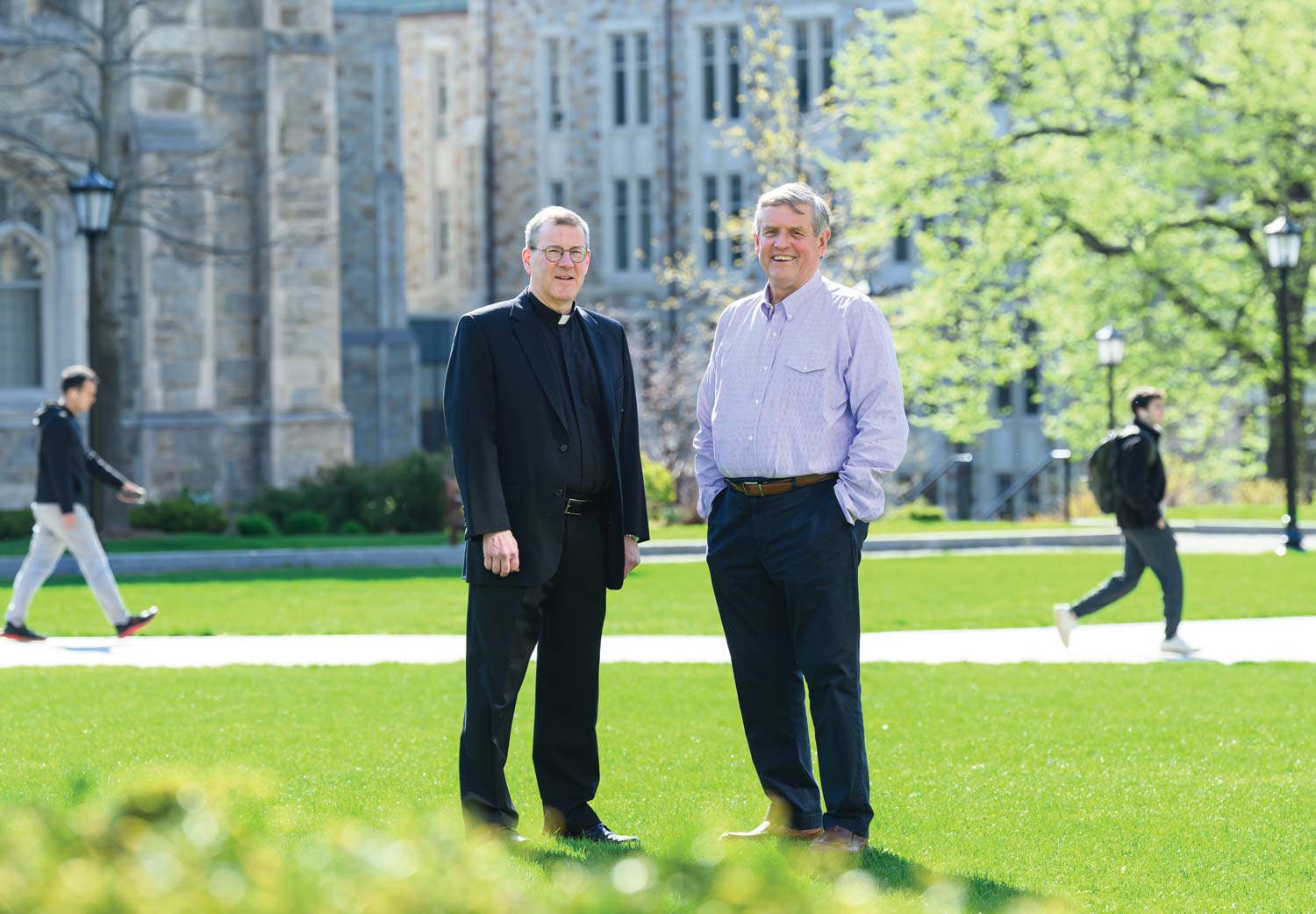

At BC, we don’t let disciplinary boundaries get in the way of what creates a formative experience for our students. By bringing together great faculty across schools, we’re shaping an innovative curriculum that integrates the humanities, management, and sciences.”
—ANDY BOYNTON (RIGHT) REFLECTING ON HIS ACADEMIC PARTNERSHIP WITH FR. KALSCHEUR (LEFT)
In recent years, the Morrissey College of Arts and Sciences and the Carroll School of Management have forged an especially close partnership—what Andy Boynton ’78, P’13, John and Linda Powers Family Dean of the Carroll School, calls “a multidisciplinary bridge.” He and Morrissey College Dean Greg Kalscheur, S.J., MDiv’01, encourage their students to take courses in each other’s schools, and today, roughly half of all Carroll School students graduate with an additional major or minor in the Morrissey College, and one-third of Morrissey College students have declared a minor at the Carroll School.
Despite this close integration, no endowments existed to promote the bonds between the Morrissey College and the Carroll School—until the arrival of the Challenge Match. Since 2024, donors have used the match to establish two endowments that support curricular development between the schools as well as one University professorship whose recipient will integrate the humanities, management, and sciences in their teaching and research. With these gifts, the growing connections between the University’s two largest schools are now bolstered by dedicated, perpetual funding.
But the impact of the Challenge Match extends further, benefitting all of the Heights. At the core of Boston College’s Jesuit, Catholic mission is formative education. Integrating intellectual, social, ethical, and spiritual dimensions, formative education “pursues the full human flourishing of all of our students,” says Provost Quigley. In 2022, through the Challenge Match, a donor family established an endowed fund to support the Office of the Provost’s formative education initiatives. The gift was followed by two subsequent endowed funds, both established in 2024 through the Challenge Match, to support faculty projects and academic initiatives at the provost’s discretion.
While the Faculty Challenge Match inspired gifts across schools and disciplines, it was first focused primarily on STEM (science, technology, engineering, and mathematics) faculty in hopes of more quickly closing the gap in these crucial—and resource-intensive—fields.

By 2026, 12 endowed faculty positions were created in STEM fields—an unprecedented investment that reinforced BC’s standing as a top research university. For DeLuca
Professor Thomas Chiles, Vice Provost for Research and Academic Planning, the impact has been immediate.
“I don’t think you can overstate the importance of endowed professorships and fellowships,” Chiles says. “We educate the next generation of scientists and scholars. If we want them to be leaders who have an impact in the world, we have to expose them to the highest caliber faculty— and endowed professorships bring those faculty to BC.”
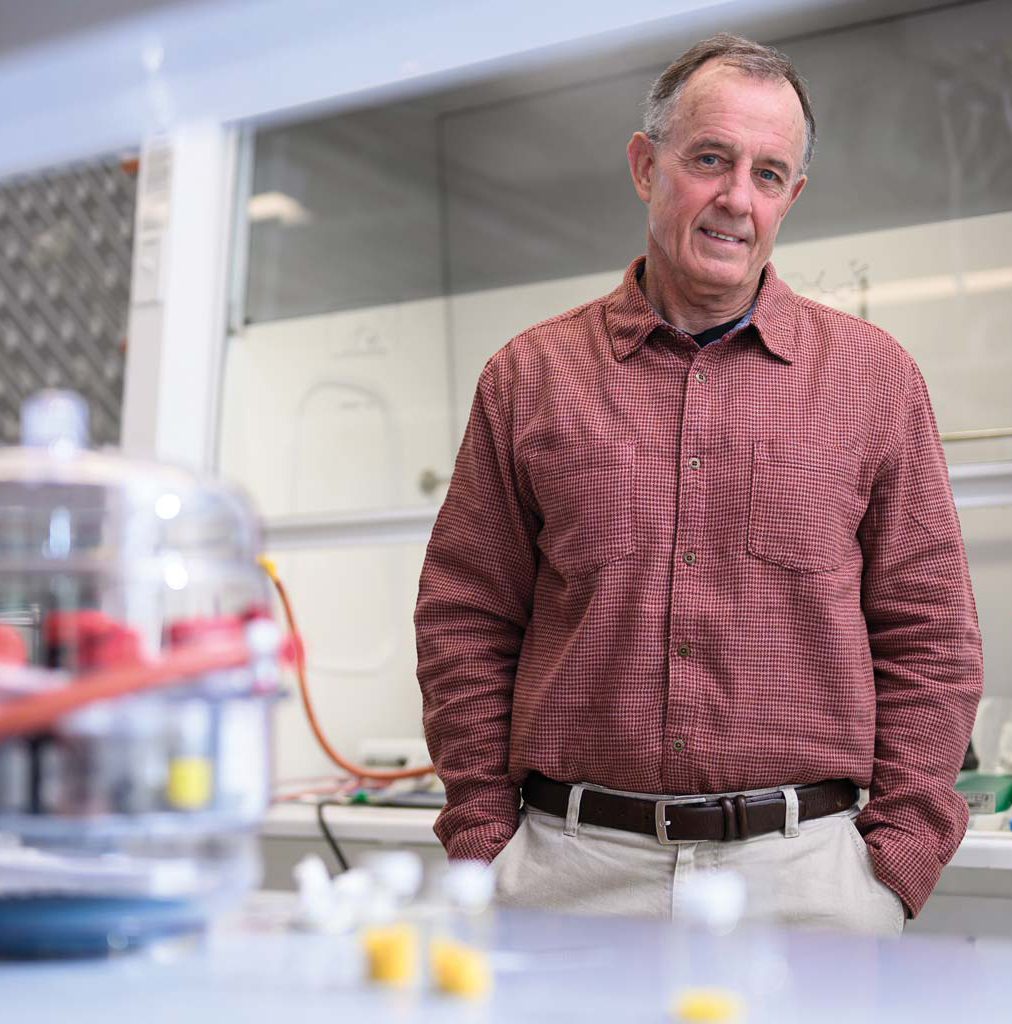
When I heard about the Challenge Match, my reaction was: hallelujah. What a way to raise the bar for the entire University.”
—THOMAS CHILES
The Challenge Match arrived at a pivotal moment: BC had recently achieved R1 status, elevating its national profile and intensifying competition for top scientists.
Three of the first endowed funds were designated for the newly launched human‑centered engineering department, providing a foundation for recruiting exceptional faculty and signaling BC’s long‑term commitment to the distinctive program grounded in ethics and the common good. “Having those three positions endowed signaled that engineering was a very important endeavor,” says Chiles. “It allowed us to recruit high‑caliber faculty we might not otherwise have been competitive for.”
Beyond engineering, the new endowed funds are strengthening STEM departments at a time when federal funding is tightening. They provide significant investments in equipment, data, lab space, and personnel. “A lot of the ideas that drive research come from our undergrads, our grad students, our postdocs, and our colleagues,” says Chiles. “To explore those ideas, you need resources, facilities, and time. Endowed support gives faculty the flexibility to move ideas forward, generate data, publish, and be competitive for grants.”
Strengthening the sciences speaks directly to BC’s mission, says Chiles. It ensures that students learn from leading scholars, participate in cutting‑edge research, and are prepared to confront the complex problems facing society, people, and the planet.
When Odette Lienau arrived at Boston College Law School in 2023 as the inaugural Marianne D. Short, Esq., Dean, she found a faculty at a turning point. Beloved senior scholars were retiring, rising stars were being recruited by peer institutions, and new voices were gaining prominence.
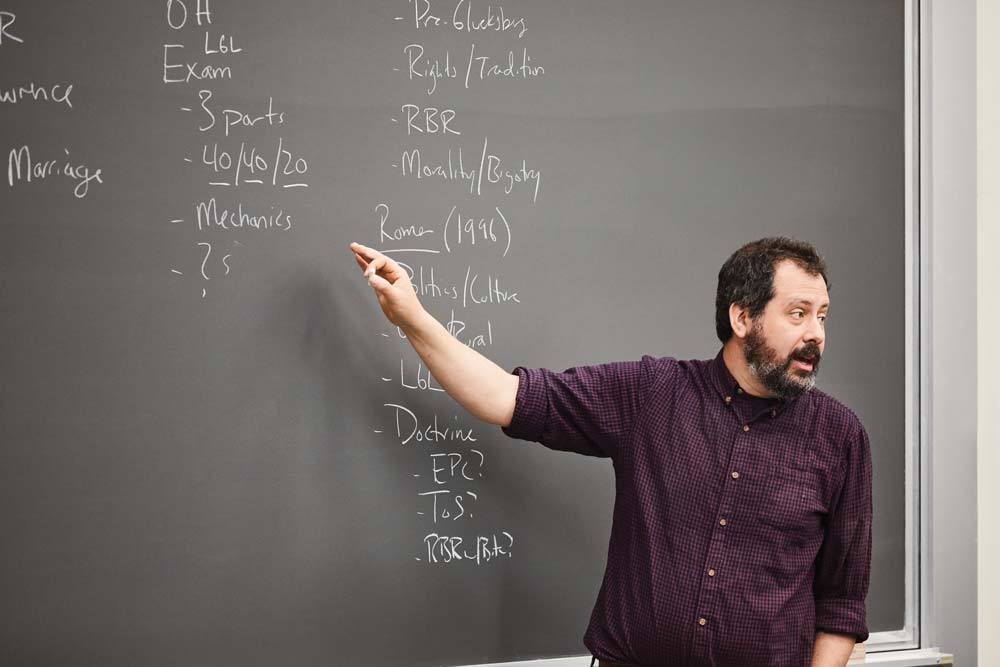
It was a moment of profound renewal, and she knew that expanding endowed faculty support—BC Law had only seven named titles at the time—would be essential. That number has now more than doubled to a record 18 endowed faculty positions, thanks to the Soaring Higher campaign and Faculty Challenge Match.
“As soon as I heard about the Challenge Match, I knew it was going to be a game changer,” says Lienau. The match energized donors who had long admired BC Law’s faculty but assumed an endowed gift was out of reach. The faculty responded with equal enthusiasm, expressing “surprise at the scale of the match and real appreciation that some of it would be allocated to the Law School.” Of the donors behind the initiative, the dean praises their “generosity and interdisciplinarity of vision—thinking about the University as a whole and about faculty as bridge builders across disciplines.”
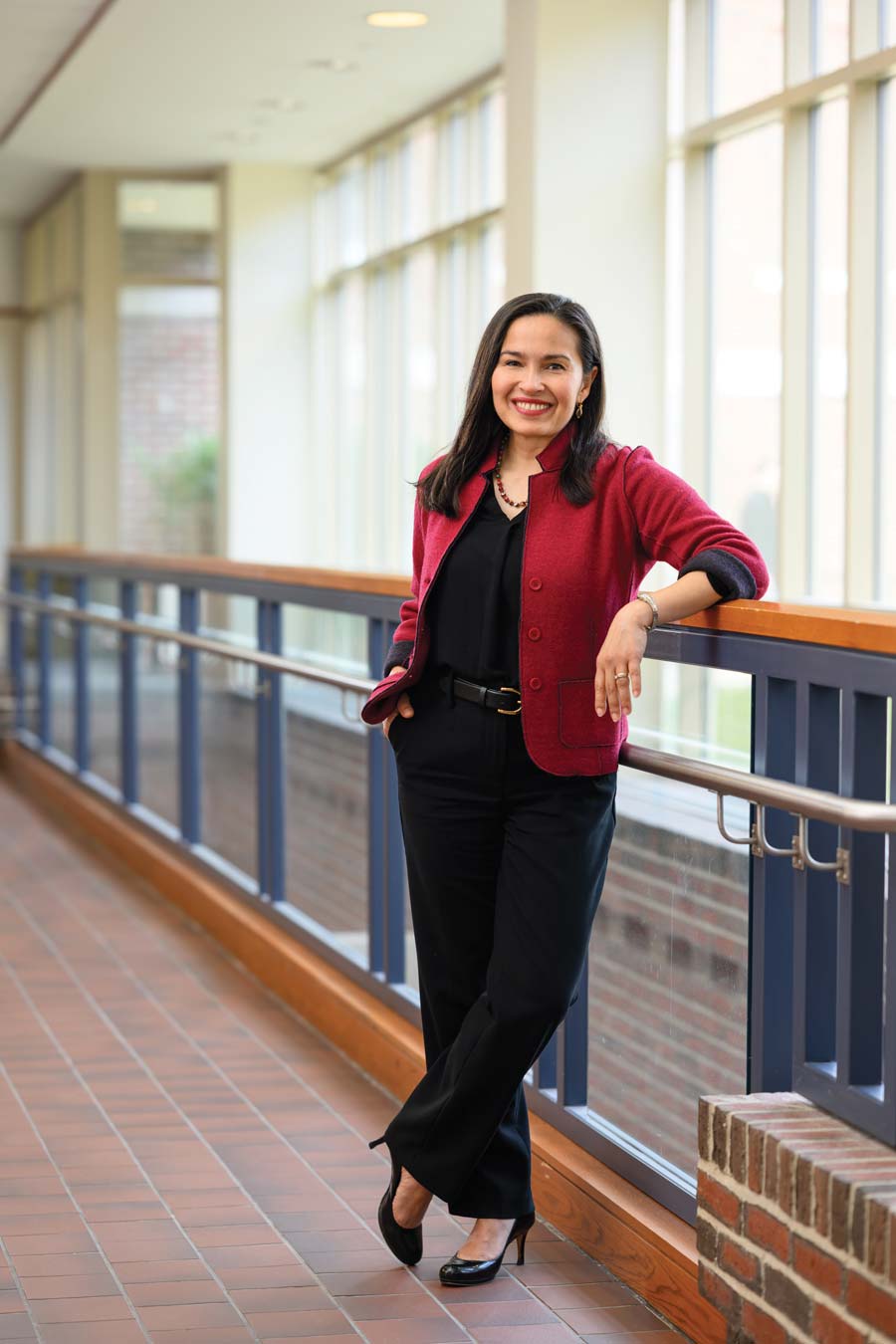
The growth in endowed positions has been an important marker of our progress as a law school—of our commitment to research and teaching at the highest levels.”
—Odette Lienau
Endowed titles are especially important at the nation’s top law schools. They provide faculty with resources for ambitious, public‑facing scholarship—funding for major projects, costly datasets, scholarly engagement, and research assistants—and they carry significant weight beyond campus. “An endowed professorship is a signifier of our confidence in a scholar’s expertise,” Lienau says, “and it’s externally recognized as well.” In a field where invitations to expert panels, symposia, and policy discussions can hinge on such markers, endowed titles give BC Law faculty both the support and the standing to shape national conversations.
Among the 11 new positions are four professorships, three dean’s faculty fellowships, three faculty fellowships, and the deanship. Already, they have strengthened the school’s academic reputation and given Lienau essential tools to compete for top talent. “BC Law, like so many law schools, is in a moment of faculty renewal,” says Lienau. “Being able to share that they will have a guaranteed source of support has been very important—whether we’re retaining key faculty as other schools show interest, or drawing top talent from across the country.”