
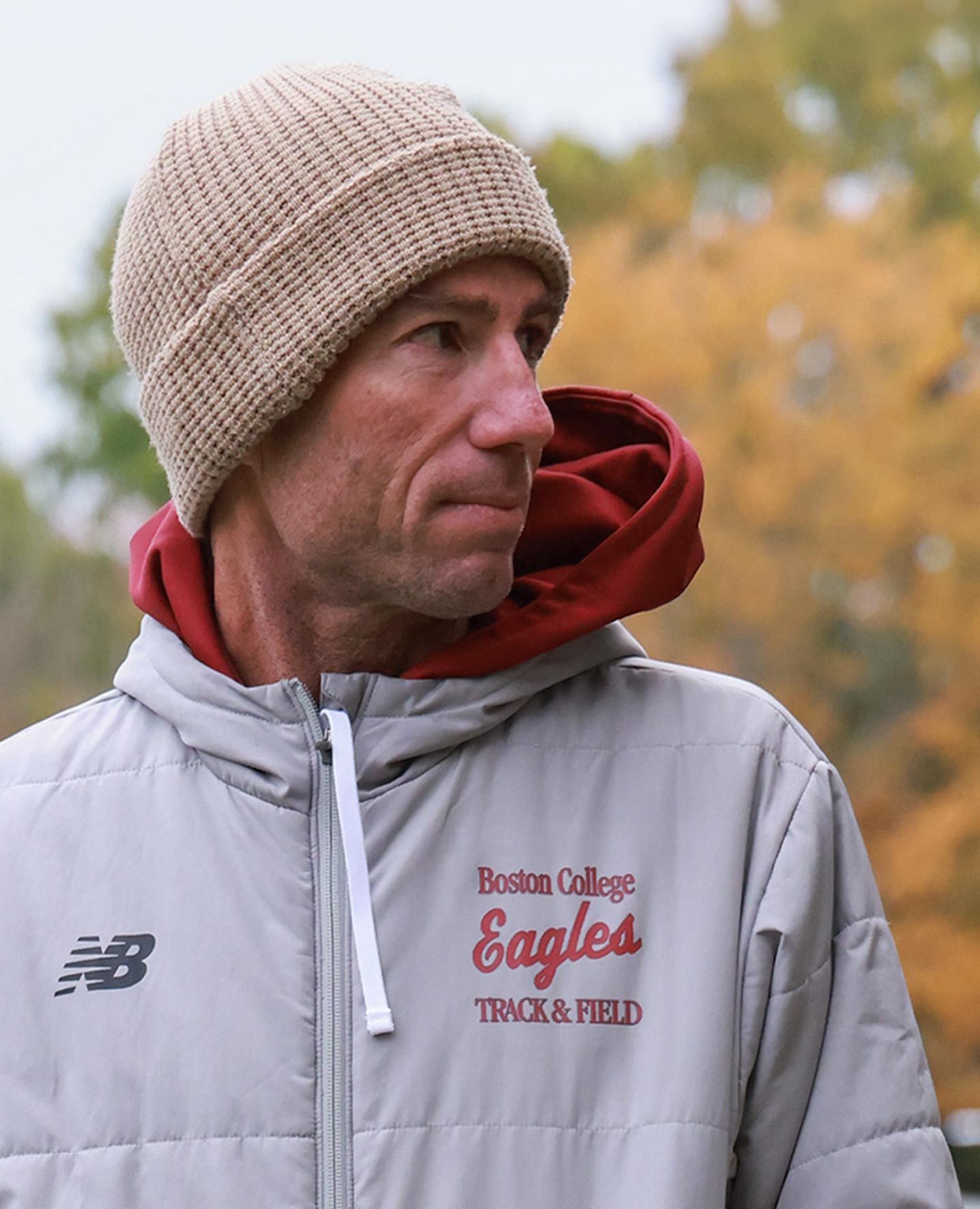
Pete Watson
Director of Men’s and Women’s Track & Field and Cross Country
Listen to the audio version of this article
Pete Watson took over Boston College’s men’s and women’s track & field and cross country in 2022, arriving with 18 years of coaching experience at universities across the country, including four years at the University of Texas. At the Heights, he has poured himself into reshaping the programs by bringing in top talent—and winning events. He sat down with Beacon to talk about BC’s culture, donor support, and life.
Your title is “director” instead of “coach”. What’s the difference?
Honestly, it’s just a fancier title. With so much administrative and compliance work now, a head coach is never just about coaching. Here, I have great assistants who handle a lot of that, which frees me up to actually coach. I’m still the head coach at the end of the day.
What drew you to BC?
Several factors. First, landing a director role in the Power Four [ACC, Big Ten, Big 12, SEC] is rare. And once I got to know Blake [James, William V. Campbell Director of Athletics] and understood the athletic department’s expectations and the resources they were committed to, it was clear: This should be a nationally relevant program. That’s what sold me. Personally, my wife and I always felt like Boston was a place we could live. I already had friends here and ties to the marathon. Plus, I’m from Ontario, so being in the Northeast meant I could actually drive home to see family, rather than fly from Austin.
What are you most proud of since arriving?
Where we are right now. Men’s and women’s programs are finally on equal levels. That took years. When you walk into a program that’s been through a lull, people have either never seen success or forgotten what it looks like, so buy-in is hard to earn. It’s taken consistent messaging, year after year, to get everyone—athletes, staff—to believe we’re not content just being Division I. We want to line up and feel like we belong. That shift is the thing I’m proudest of.
How has recruiting changed as the program has turned around?
Dramatically. Early on, recruits would ask why they should come here when the results weren’t there yet. Now, the more success we have, the easier recruiting gets. People can see that what we’re selling is real. This past class brought in some of the best junior women in the world: World Juniors competitors, a European champion. We just hosted a visit with four girls who were top-10 juniors in the country last year.
Walk me through a typical training year.
There’s no off-season. There is cross country, indoor, and outdoor track all year. We train year-round at Harry Downes over in Brookline, move indoors to the TRACK at new balance in Brighton in November, and do long runs out at the Holliston Rail Trail. We also do training camps throughout the country in places such as Park City, Utah; Stowe, Vermont; the Olympic Training Center in San Diego, California; and Bend, Oregon. All of that travel and training is donor-funded.
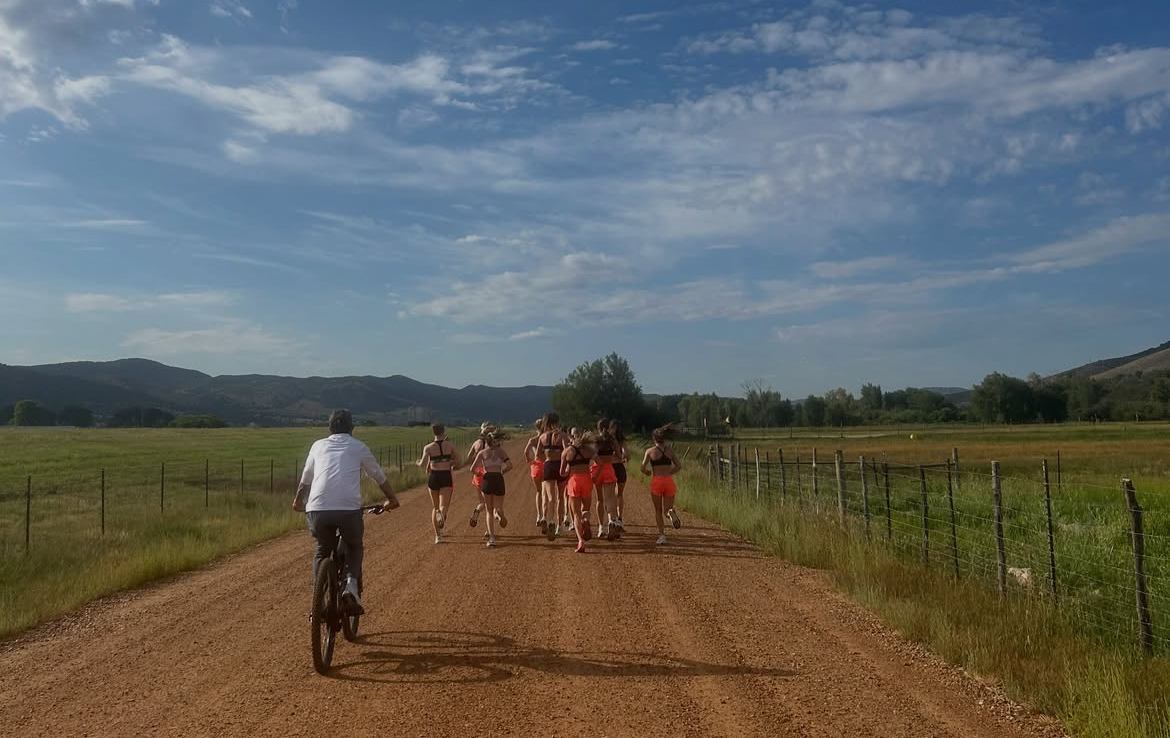
Training in Park City, Utah, in August, made possible by donors who stepped up to support the team.
Speaking of donors, how has donor support shaped the program?
It’s the single biggest difference-maker. We don’t have an enormous budget, so every dollar has to work hard. We have incredible supporters, and believe me when I say a gift of $500 or $1,000 is significant for us. If I say the teams need something, it gets done. Our athletes get acupuncturists, massage therapists—true professional-level care. That’s 100 percent because of donors.
What sets BC athletics apart from other places you’ve coached?
The moral support from the department. At Texas, we won a national championship, but we were always in football’s shadow. Here, Blake makes it clear this program matters.
Roster size has changed under your watch. Tell me about that.
We came in with 40 to 45 on the roster; now we’re at 26 women and 22 men. With four full-time assistants, no one falls through the cracks and there’s a healthy competitive edge. Every student-athlete knows their spot matters.
How is recruiting different at BC?
Our men’s program is the only one in the ACC with no scholarships for track & field. Every student-athlete on the roster is a walk-on. But they are recruited walk-ons who could have had big scholarships elsewhere; they choose BC for the education. On the women’s side, it’s the opposite: We’re competing for the best junior talent in the world.
Beyond the track, what should we know about you?
My wife, Kristin, and I have been married since 2004 and we have a dog named Choge. Kristin earned her MBA from BC two years ago. As for me, I don’t run anymore—I let the teams do that. Instead, I’ve traded running for cycling. And a lot of walking and playing with Choge on the hill at the McMullen Museum on the Brighton Campus.